
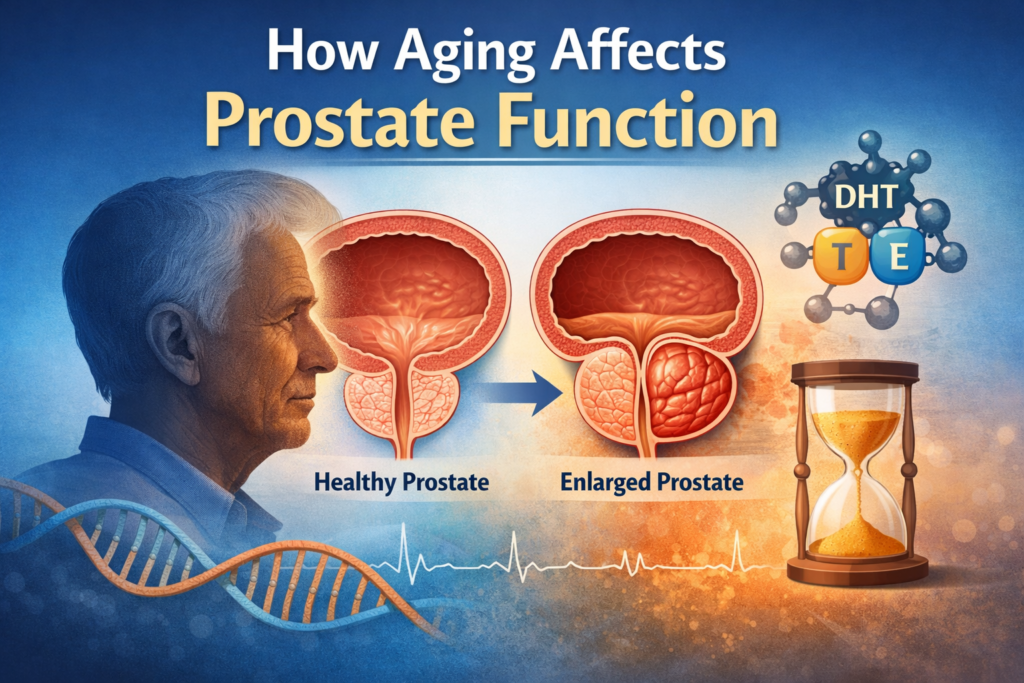
As men age, changes in the body are inevitable. Some are visible, others less so—but no less important. One of the most common age-related changes in men involves the prostate, a small gland that plays a key role in male reproductive health. Understanding how aging affects prostate function can help clarify what is considered normal, what may require attention, and how lifestyle choices can influence long-term prostate health.
This article explores how the prostate changes over time, why these changes occur, and when they may become a concern.
What Is the Prostate and Its Role in the Body?
The prostate is a walnut-sized gland located just below the bladder and in front of the rectum. It surrounds the urethra, the tube that carries urine and semen out of the body. Its primary function is to produce a fluid that nourishes and protects sperm, contributing to semen quality.
Although small, the prostate’s position means that even modest changes in its size or structure can affect urinary and reproductive function.
How the Prostate Changes With Age
Prostate changes are largely driven by aging-related biological processes. Unlike many organs that tend to shrink over time, the prostate often gradually enlarges as men get older.
This enlargement does not necessarily indicate disease. In fact, prostate growth is common and considered part of normal aging for many men. By age 60, a significant proportion of men experience some degree of prostate enlargement, even if they have no noticeable symptoms.
👉 🎥
This short video provides a visual summary of the key physiological changes that affect prostate function as men age.
Hormonal Shifts and Prostate Growth
One of the primary drivers of prostate changes with age is hormonal balance. As men grow older, levels of testosterone decline slowly, while the relative influence of other hormones—such as dihydrotestosterone (DHT) and estrogen—can increase.
DHT, a derivative of testosterone, plays a significant role in prostate cell growth. Even when testosterone levels decrease, DHT can remain active within prostate tissue, contributing to gradual enlargement. These hormonal shifts help explain why prostate changes often accelerate later in life.
As age-related structural and functional changes occur within the prostate, researchers also examine measurable biological markers that may reflect these shifts over time. Among the most commonly discussed is Prostate-Specific Antigen (PSA), a protein naturally produced by prostate tissue and often referenced in conversations about aging and prostate health.
PSA Levels and Age-Related Changes
Prostate-Specific Antigen (PSA) is a protein produced primarily by prostate tissue. PSA levels are commonly measured through a blood test and are often discussed in the context of age-related prostate changes.
As men grow older, gradual changes in prostate structure and cellular activity may influence PSA levels. It is widely recognized in medical literature that PSA values can vary with age, and interpretation typically depends on individual context rather than a single isolated number.
PSA testing is generally used as a monitoring tool rather than a standalone diagnostic measure. Factors such as natural aging processes, benign enlargement, and temporary physiological variations may all contribute to changes in PSA levels over time.
For this reason, healthcare professionals usually evaluate PSA results alongside clinical history, physical examination findings, and other relevant indicators. Understanding PSA within a broader physiological context helps avoid oversimplification and supports a more balanced interpretation of age-related prostate changes
Common Age-Related Prostate Changes
Several prostate-related changes are commonly associated with aging:
- Gradual enlargement of the prostate gland
- Increased pressure on the urethra
- Changes in urinary flow
- More frequent nighttime urination
- A sensation of incomplete bladder emptying
It is important to note that these changes vary widely among individuals. Some men experience noticeable symptoms, while others remain largely unaffected despite measurable prostate growth.
When Prostate Changes Become a Concern
While many prostate changes are benign, certain symptoms may signal the need for medical evaluation. Persistent or worsening urinary difficulties, pain, blood in urine, or sudden changes in urinary habits should not be ignored.
Age itself is not a disease, but it can increase vulnerability to conditions that affect prostate health. Distinguishing between normal aging-related changes and potential health issues often requires professional assessment.
Lifestyle Factors That May Influence Prostate Health
Although aging cannot be stopped, lifestyle factors may influence how prostate changes manifest over time. Research suggests that overall metabolic health, inflammation levels, and circulation can all play a role in prostate function.
Factors commonly associated with prostate health include:
- Dietary patterns, particularly intake of fruits, vegetables, and healthy fats
- Physical activity, which supports hormonal balance and circulation
- Weight management, as excess body fat can influence hormone levels
- Sleep quality and stress management, which affect systemic inflammation
While lifestyle choices cannot guarantee prevention of prostate issues, they may contribute to better overall function and resilience as the body ages.
Evidence-Based Approaches to Supporting Prostate Health
👉 🎥
This short video provides a visual summary of the key physiological changes that affect prostate function as men age.
Scientific research continues to explore how nutrition, physical activity, and certain naturally occurring compounds may support prostate function. Rather than focusing on quick fixes, evidence-based approaches emphasize long-term habits and informed decision-making.
Many men choose to learn more about prostate health options as part of a broader strategy to maintain quality of life with age. Exploring credible sources and understanding the limits of current research is an important step in that process.
Related Research Topics:
Prostate Inflammation: What It Is and Why It Matters With Age
Final Thoughts
Aging affects every system in the body, and the prostate is no exception. For many men, prostate changes are a normal part of growing older and do not automatically indicate a serious problem. Understanding what drives these changes—and recognizing when something may fall outside the expected range—can reduce unnecessary concern and support informed health decisions. Prostate health is best approached as part of overall well-being, combining knowledge, awareness, and evidence-based choices over time.