
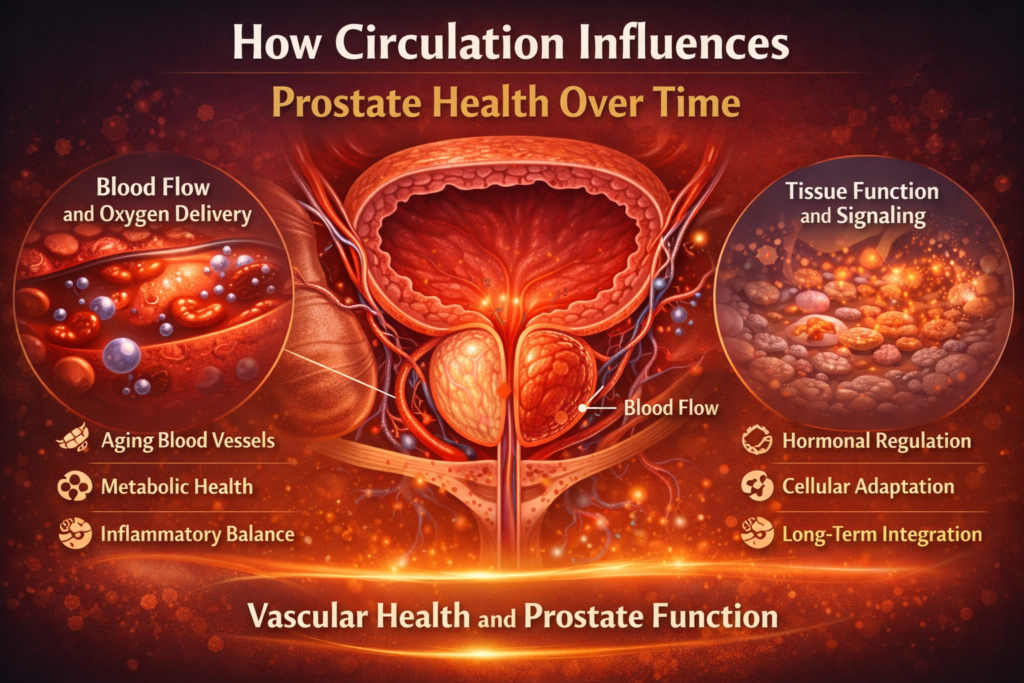
Prostate health is often discussed in terms of size, inflammation, or urinary symptoms. Less commonly explored is the role of circulation—yet blood flow plays a fundamental role in how prostate tissue functions and adapts over time.
Research increasingly suggests that age-related changes in circulation may influence how prostate tissue responds to metabolic, hormonal, and inflammatory signals throughout adulthood.
The Prostate as a Vascular Tissue
Like all organs, the prostate depends on an adequate blood supply to receive oxygen, nutrients, and signaling molecules. Proper circulation supports normal cellular activity and tissue maintenance.
When circulation becomes less efficient, tissues may experience subtle changes in oxygen delivery and waste removal, which can influence how cells function over time.
Age-Related Changes in Blood Flow
As part of the natural aging process, blood vessels may gradually lose elasticity and responsiveness. These changes can affect circulation in multiple regions of the body, including the pelvic area.
Reduced vascular flexibility and altered blood flow regulation are commonly studied in relation to aging, and researchers examine how these shifts may influence prostate tissue environment over the long term.
Circulation and Tissue Signaling
Blood flow is not only responsible for nutrient delivery—it also plays a role in cellular communication. Hormones, immune signals, and metabolic byproducts travel through the circulatory system.
Changes in circulation may alter how effectively these signals reach prostate tissue, potentially influencing local responses and long-term adaptation.
Interaction Between Circulation and Inflammation
Circulation and inflammation are closely connected. Efficient blood flow supports balanced inflammatory responses, while impaired circulation may contribute to prolonged or low-grade inflammatory activity.
Research explores how vascular efficiency may influence inflammatory signaling within prostate tissue, particularly as men age.
Metabolic Health and Vascular Function
Metabolic factors such as insulin sensitivity, lipid balance, and overall cardiovascular health are closely tied to circulation quality. These systemic factors may indirectly influence prostate health by shaping the vascular environment that supports prostate tissue.
Rather than acting independently, circulation and metabolism interact as part of a broader physiological network.
Lifestyle Factors That Influence Circulation
A growing body of research examines how lifestyle patterns influence vascular health over time. While no single behavior determines outcomes, several factors are consistently associated with circulatory function:
- regular physical movement
- cardiovascular conditioning
- metabolic balance
- stress regulation
- sleep quality
These factors are studied for their systemic effects rather than prostate-specific actions alone.
Interpreting Circulation Research Responsibly
🎥 Video Overview: Circulation and Prostate Health
(A short visual explanation exploring how blood flow and vascular health relate to prostate function over time.)
It is important to interpret circulation-related findings with nuance. Associations observed in research do not imply direct causation, and individual variability plays a significant role.
Circulation represents one component of prostate health, interacting with hormonal, immune, and metabolic systems rather than acting as a standalone factor.
Final Thoughts
Circulation plays a foundational role in how prostate tissue functions and adapts over time. Age-related changes in vascular health may influence the prostate’s local environment, shaping how it responds to broader physiological signals.
Viewing prostate health through a circulatory lens supports a more integrated understanding—one that emphasizes systemic health and long-term balance rather than isolated symptoms.