
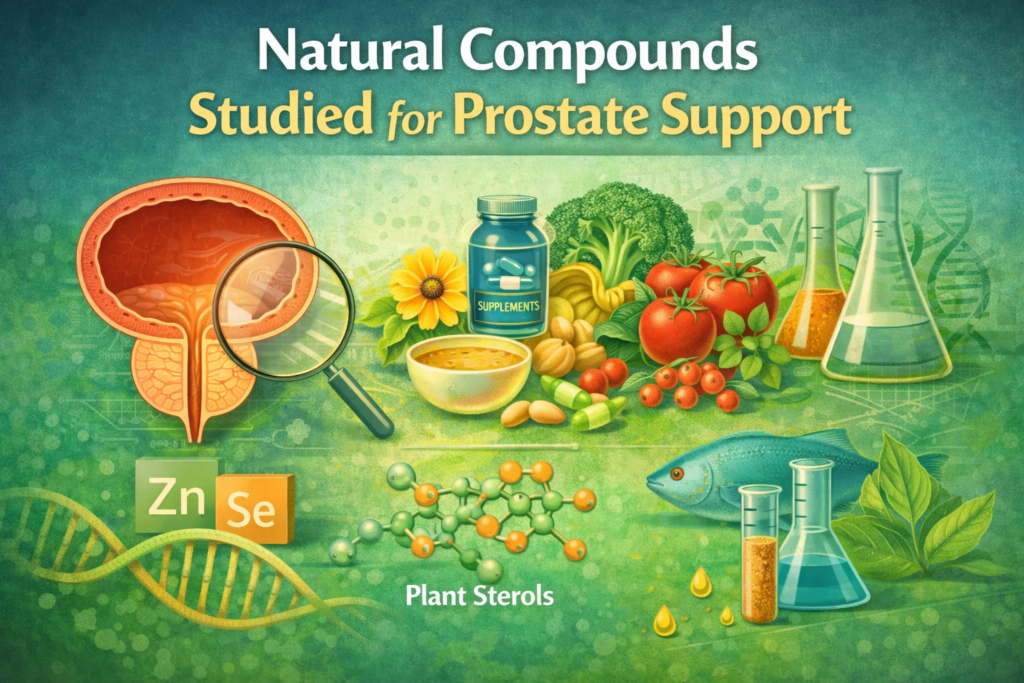
As research into prostate health continues to evolve, scientific interest has increasingly turned toward naturally occurring compounds that may help support normal prostate function. Rather than focusing on treatment or cure claims, much of this research explores how certain compounds may influence inflammation, oxidative stress, hormonal balance, and urinary function.
This article reviews natural compounds that have been studied in relation to prostate support, while emphasizing the importance of cautious interpretation and evidence-based context.
Understanding the Role of Natural Compounds
In scientific research, natural compounds are often examined for their biological activity rather than as standalone solutions. Many of these compounds are found in plants, foods, or naturally occurring substances that have been part of traditional diets for generations.
Research typically evaluates how these compounds interact with physiological processes, such as inflammation pathways or cellular signaling, rather than framing them as direct interventions.
Plant-Based Compounds Commonly Studied
Phytosterols
Phytosterols are plant-derived compounds structurally similar to cholesterol. They have been studied for their potential role in supporting normal urinary flow and prostate-related comfort, particularly in aging men. Research suggests they may influence certain pathways involved in prostate tissue activity.
Polyphenols and Antioxidants
Polyphenols are naturally occurring antioxidants found in fruits, vegetables, and various plant sources. These compounds are widely studied for their ability to counter oxidative stress, a process associated with cellular aging and inflammation.
Oxidative stress is not unique to the prostate, but it is one of the broader biological factors researchers examine when studying age-related changes in prostate tissue.
Fatty Acids and Lipid Compounds
Certain fatty acids, particularly those found in plant and marine sources, have been studied for their role in inflammatory balance. Research in this area often focuses on how lipid compounds may support overall metabolic health, which can indirectly influence prostate-related outcomes.
Minerals and Micronutrients in Research
Zinc
Zinc is a mineral involved in numerous cellular processes. It is naturally present in relatively high concentrations in prostate tissue, which has made it a subject of interest in prostate-related research. Studies explore how zinc status may relate to normal cellular function within the prostate.
Selenium
Selenium is another micronutrient studied for its role in antioxidant systems. Research focuses on its involvement in cellular protection mechanisms rather than direct prostate-specific outcomes.
Botanical Extracts in Prostate Research
Various botanical extracts have been examined for their traditional use and biological activity. In research settings, these extracts are typically evaluated for their potential influence on inflammation, hormone-related pathways, or urinary function.
It is important to note that botanical research varies widely in quality, and results often depend on extraction methods, dosage, and study design.
Whole-Food Context vs. Isolated Compounds
Many researchers emphasize that compounds do not act in isolation within the body. Whole-food dietary patterns provide a complex mix of nutrients that may work synergistically. As a result, research often considers whether benefits observed in isolated compounds reflect broader dietary habits rather than single ingredients.
This perspective reinforces the importance of viewing natural compounds as part of a larger lifestyle and nutritional context.
Supplements and Research Interpretation
🎥 Video Overview: Evidence-Based Prostate Support
Some commercially available supplements combine multiple natural compounds that have been studied individually. While this approach reflects research interest in synergy, the effectiveness of such combinations depends on formulation quality, dosing, and individual variability.
Scientific research generally frames supplements as supportive tools rather than primary solutions, highlighting the need for realistic expectations.
Interpreting Findings With Caution
Research into natural compounds and prostate support is ongoing. Differences in study design, populations, and outcome measures mean that findings should be interpreted as evolving evidence rather than definitive conclusions.
Responsible interpretation involves recognizing both potential benefits and limitations, avoiding overstated claims, and prioritizing overall health context.
Final Thoughts
Natural compounds continue to be an area of active research in relation to prostate health. While certain compounds show promise in supporting normal biological processes, they are best understood as part of a broader strategy that includes lifestyle, nutrition, and informed decision-making.
Understanding what research suggests—and what it does not—can help individuals approach prostate health with clarity and balance over time.