
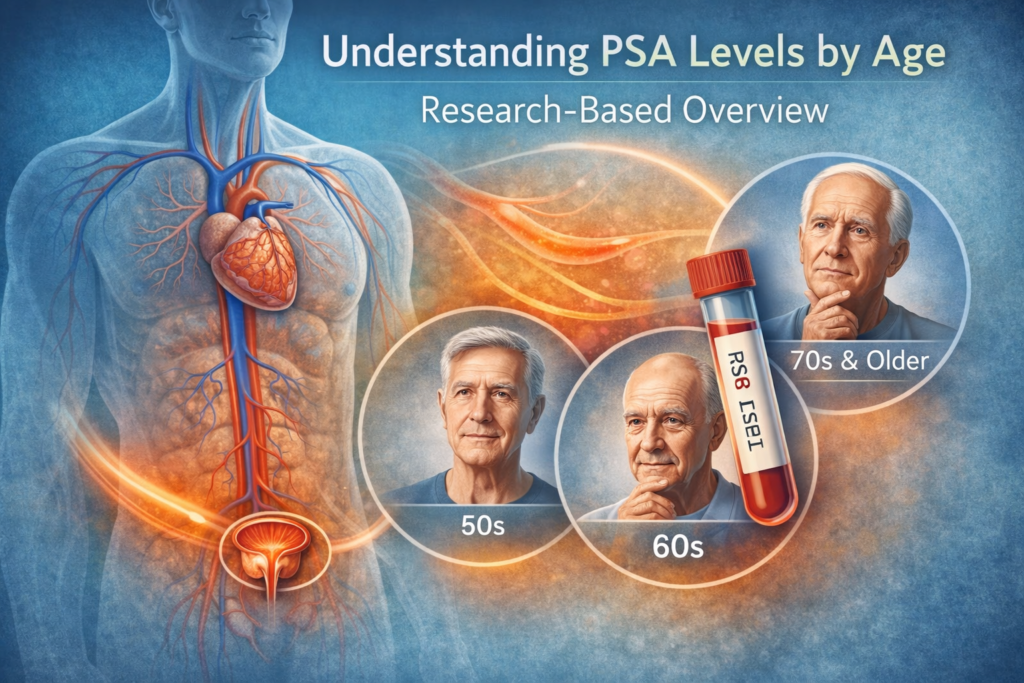
Prostate-Specific Antigen (PSA) is a protein produced primarily by cells within the prostate gland. PSA testing is widely used as a monitoring tool in discussions about prostate health, particularly as men grow older.
Because prostate tissue naturally changes over time, PSA levels are often interpreted within the broader context of age-related physiological variation. Understanding how age may influence PSA helps create a more balanced and informed perspective.
What Is PSA?
🎥 Video Overview: PSA Levels and Age Explained
(A concise visual explanation exploring how PSA levels relate to age and broader prostate physiology.)
PSA is a protein secreted by prostate cells into the seminal fluid, with small amounts entering the bloodstream. A PSA blood test measures the concentration of this protein in circulation.
Importantly, PSA is not a diagnosis. It is a biomarker—one piece of information among many that healthcare professionals consider when evaluating prostate health.
How Age May Influence PSA Levels
As men age, gradual structural and cellular changes occur within the prostate. These changes can influence PSA production and circulation.
Researchers recognize that PSA levels may naturally vary over time. Rather than applying a single universal interpretation, PSA results are typically viewed within an age-related framework and alongside other clinical factors.
This is why discussions about “normal PSA by age” often emphasize context rather than isolated numbers.
Why PSA Levels Can Vary
PSA levels may fluctuate due to several physiological factors, including:
- natural aging processes
- benign enlargement of prostate tissue
- temporary inflammation
- recent physical activity affecting the pelvic region
- normal biological variation
Because multiple factors can influence PSA, interpretation requires a systems-based perspective rather than a single-variable conclusion.
PSA and the Broader Prostate Health Context
PSA is best understood as part of a larger picture that includes:
- clinical evaluation
- symptom patterns
- physical examination findings
- medical history
- ongoing monitoring trends
Trends over time often provide more meaningful insight than a single measurement.
🎥 Video Overview: PSA Levels and Age Explained
A concise visual explanation exploring how PSA levels relate to age and broader prostate physiology.
Avoiding Oversimplification
Online searches frequently focus on terms such as “normal PSA range by age” or “dangerous PSA levels.” While these questions are understandable, scientific interpretation rarely relies on rigid thresholds alone.
PSA is a dynamic marker influenced by tissue activity, vascular factors, and systemic physiology. Viewing PSA within a broader biological framework reduces unnecessary alarm and supports informed decision-making.
Final Thoughts
PSA testing plays an important role in monitoring prostate health, particularly as age-related changes occur. However, PSA values are not standalone conclusions.
A research-based perspective emphasizes context, patterns over time, and integrated clinical interpretation. Understanding how age may influence PSA levels encourages a measured, informed approach rather than oversimplification.