
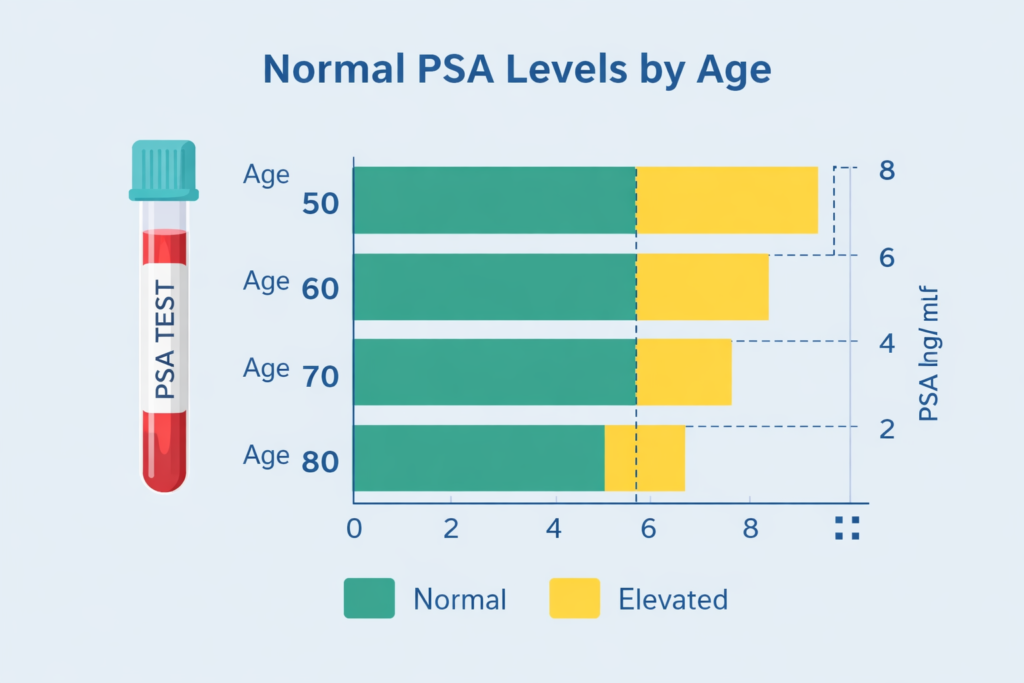
Prostate-Specific Antigen (PSA) is a protein produced by prostate cells, and its levels are commonly measured through a blood test. Many men encounter PSA testing as part of routine health monitoring, especially as they get older.
One of the most common questions people ask is: what is considered a normal PSA level by age? The answer, however, is not as simple as a single number.
Understanding What “Normal” Means
The idea of a “normal” PSA level is often misunderstood. PSA values can vary depending on several factors, including age, prostate size, and individual biological differences.
Rather than focusing on a fixed number, healthcare professionals typically interpret PSA levels within a broader context. This includes trends over time and other clinical observations.
Why PSA Levels Change With Age
As men age, the prostate naturally undergoes changes. These changes can influence PSA production and lead to gradual variations in PSA levels.
This is why many discussions around PSA emphasize age-related interpretation rather than a universal standard.
👉 For a broader explanation of how aging influences prostate function, see:
How Aging Affects Prostate Function
Common Reasons PSA Levels May Vary
PSA levels may fluctuate for several reasons, including:
- natural age-related prostate changes
- benign enlargement of the prostate
- temporary inflammation
- recent physical activity
- normal biological variation
Because of this, a single PSA result is rarely considered in isolation.
What About “Dangerous” PSA Levels?
Many people search for terms like dangerous PSA level or high PSA range. While it’s understandable to want clear thresholds, PSA interpretation is rarely based on a single cutoff point.
Instead, professionals typically look at:
- how PSA levels change over time
- how the value compares to previous results
- overall clinical context
👉 For a deeper look into how PSA levels may evolve with age, visit:
Understanding PSA Levels by Age
Looking at the Bigger Picture
PSA testing is just one part of understanding prostate health. It becomes more meaningful when combined with:
- medical history
- physical evaluation
- long-term monitoring
- symptom patterns
This broader approach helps avoid unnecessary concern and supports more informed decisions.
Final Thoughts
The concept of a “normal PSA level by age” is best understood as a range of possibilities rather than a fixed number. PSA levels naturally vary, especially as part of the aging process. Taking a balanced, research-based approach allows for a clearer understanding and helps avoid oversimplification.