
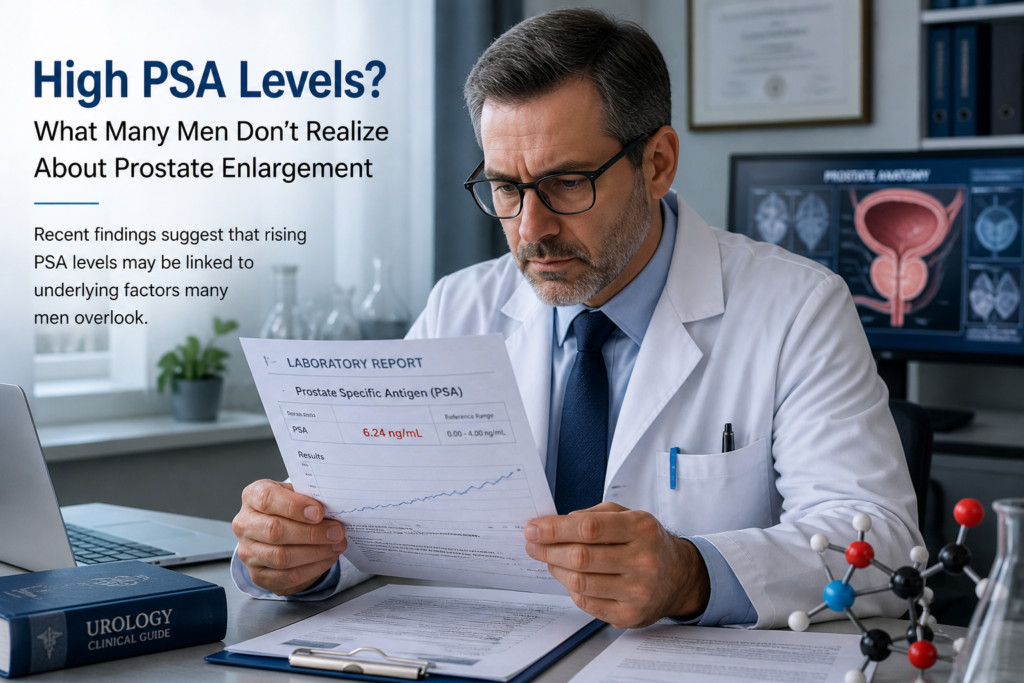
If you’ve just received your PSA test results, it’s natural to have questions. Prostate-specific antigen (PSA) is a protein made by your prostate, and elevated levels don’t automatically mean cancer. In fact, one of the most common reasons for a higher PSA is benign prostatic hyperplasia (BPH) — a non-cancerous enlargement of the prostate that affects most men as they age.
Other factors can also raise your PSA, including inflammation, recent physical activity, or even a routine exam. That’s why a single number never tells the whole story. Your doctor will look at your results alongside your age, medical history, and possibly a physical exam or additional tests before drawing any conclusions.
The most important step now is to discuss your results with your physician. Whether your PSA is normal or elevated, this conversation helps define the right follow-up for you — and regular monitoring remains one of the best tools for protecting your long-term prostate health.